FORENSIC CINEMA DISSECTION // FINAL IMAGE DOSSIERS
EDITION: 2026
DOSSIER FILE 01: FINAL FRAMES

READ THE FINAL IMAGE

The decisive frame of a film is rarely a casual punctuation mark. Directors compress thematic resolution, temporal loops, and character destiny into the final camera angle. Here is how to decode them.

SPOILER NOTICE Full plot resolution disclosed for Bong Joon-ho's Parasite (2019).

Parasite: The Tragedy of the Fund Fantasy

In the closing movement of Bong Joon-ho's Academy Award-winning Parasite, the son, Kim Ki-woo, writes a letter to his father, Ki-taek, who is now entombed within the subterranean concrete bunker of the Park estate. Ki-woo promises that he will earn immense wealth through conventional capital accumulation, purchase the home, and allow his father to simply walk up the basement stairs into the sun.

The montage displays Ki-woo in a high-end corporate suit inspecting real estate deeds, surrounded by smiling brokers. Then, with devastating economy, the film cuts back to the freezing semi-basement apartment where Ki-woo sits in the dark with a pen. The camera pans down from the high street window, tracing the exact opening shot of the film in reverse.
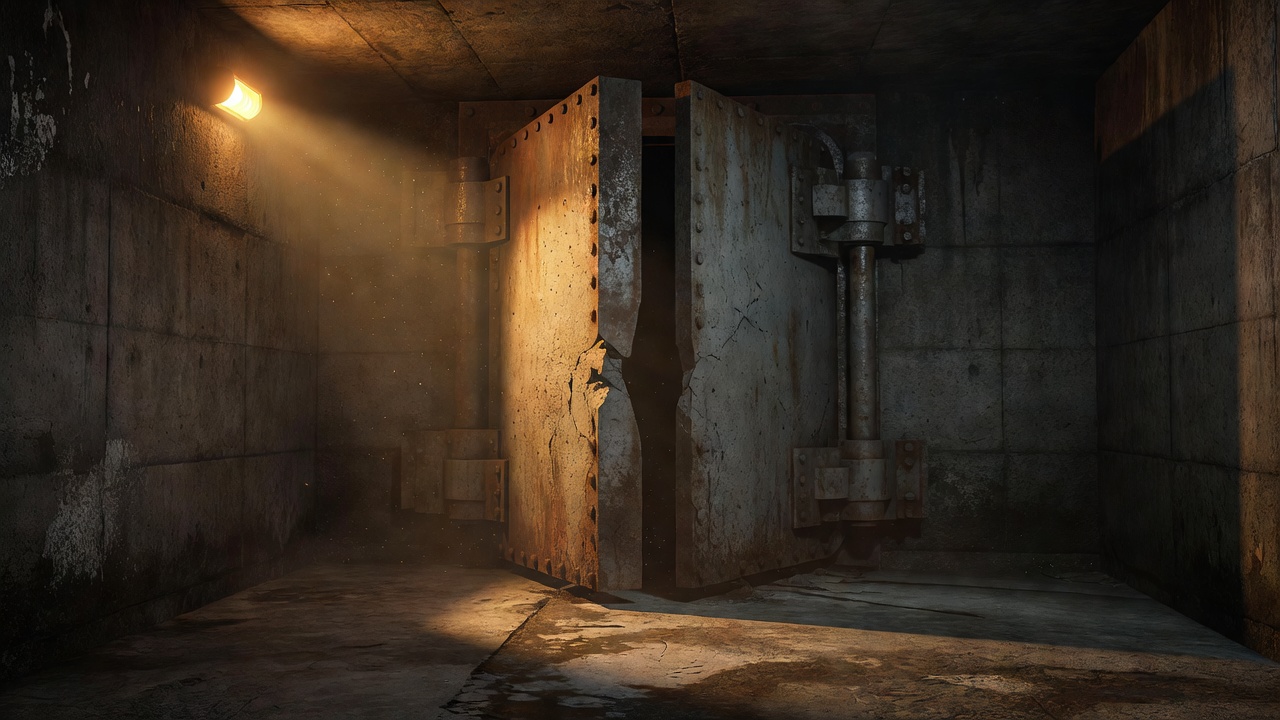
Render of a thick subterranean vault door cracked open under harsh amber illumination
Symbolic illustration: The subterranean doorway symbolizing permanent socio-economic entombment.

Bong Joon-ho noted during post-production calculations that given contemporary South Korean minimum wage rates and average real estate costs, it would take Ki-woo approximately 547 years to purchase the Park residence. The final image strips away the comforting delusion: the letter can never be mailed, the father will never walk out, and the cycle of inherited poverty remains mechanically closed.

SPOILER NOTICE Full resolution disclosed for Denis Villeneuve's Arrival (2016).

Arrival: The Non-Linear Choice of Grief

The opening minutes of Arrival present Louise Banks (Amy Adams) mourning the illness and death of her adolescent daughter, Hannah. The audience intuitively registers this montage as back-story—a tragic prologue motivating Louise’s emotional withdrawal before military helicopters arrive at her lake house.

Only when Louise learns the Heptapod circular logograms does the film's temporal architecture clarify: the Heptapod language alters the neural pathways of the brain, allowing the observer to perceive time simultaneously rather than sequentially. Hannah has not died in Louise’s past; Hannah has not yet been conceived.

"Despite knowing the journey and where it leads, I embrace it. And I welcome every moment of it." Dr. Louise Banks, Arrival

The ending pivots on moral philosophy: Louise knows with absolute certainty that marrying Ian Donnelly will result in the birth of a child doomed to a terminal illness, and that Ian will eventually abandon them when he realizes Louise knew all along. The final image of Louise stepping into Ian’s embrace is an active rejection of nihilism—an affirmative choice to experience profound joy regardless of unavoidable anguish.

SPOILER NOTICE Concluding frame analysis for Stanley Kubrick's The Shining (1980).

The Shining: Absorbed into 1921

After Jack Torrance freezes to death in the snow-blanketed labyrinth, Kubrick refuses to provide a conventional police recovery sequence. Instead, the camera glides through the silent corridors of the Overlook Hotel, pausing before a wall of black-and-white archival photographs outside the Gold Room.

The slow zoom isolates a photograph from the Fourth of July Ball in 1921. There, standing center stage, smiling with youthful vigor, is Jack Torrance. The inscription reads: "Overlook Hotel, July 4th Ball, 1921."

This final shot rejects a purely psychological explanation for Jack's breakdown. Jack did not simply contract cabin fever; the Overlook is a metaphysical containment vessel. Jack was always part of the hotel’s fabric, fulfilling Delbert Grady’s chilling assertion in the lavatory: "You have always been the caretaker. I should know, sir. I’ve always been here."

EXAMINE CHARACTER MOTIVES